The Journal · Agoura Hills, CA
Massage for stress and anxiety
Read what massage research says about stress and anxiety. Compare Relaxing and Signature sessions at our Agoura Hills spa, with current prices and booking.
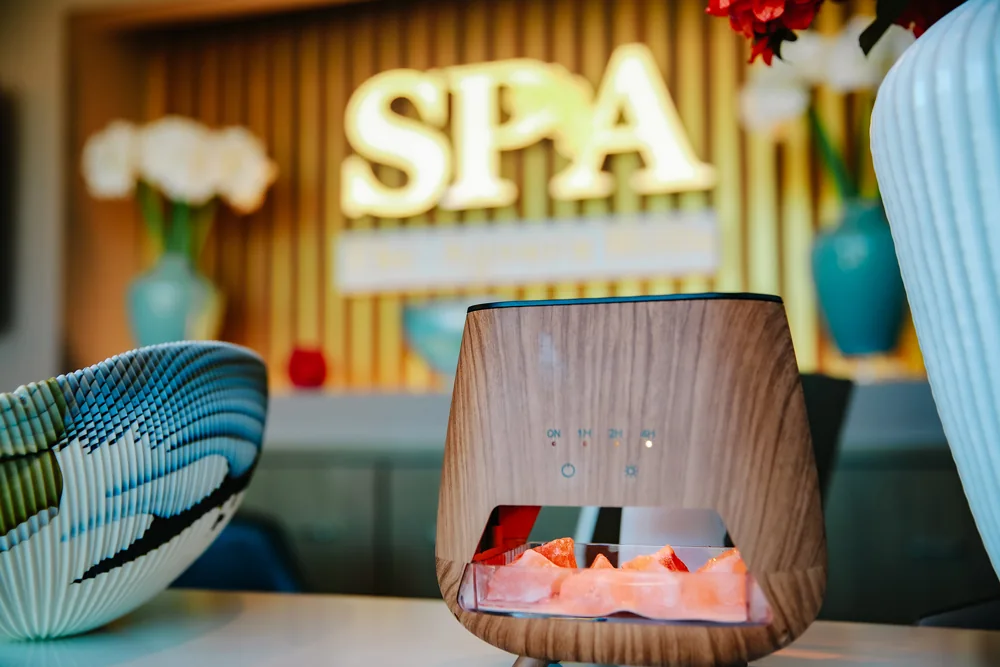
Massage can be part of making time for relaxation, but a spa should not promise to cure anxiety or replace mental health care. The current menu gives you separate Relaxing and Signature options, so you can choose a simple flowing massage or a premium ritual with clear prices.
We are at 5871 Kanan Rd, Agoura Hills, CA 91301, open every day from 10 AM to 9 PM. The current booking system is Booker. Check the service, duration, price, and available start time there before reserving.
This is the honest version of that answer, drawn from NCCIH, Mayo Clinic, and the American Massage Therapy Association. We run a spa in Agoura Hills, so we have an obvious interest in you booking a massage — which is exactly why the claims below are kept as careful as the sources that back them.
The stress physiology, in one paragraph
Per NCCIH, stress hormones drive the familiar fight-or-flight cascade: heart rate, breathing, and blood pressure climb; muscles tense; you sweat. Run that response chronically and it keeps rough company — NCCIH links long-term stress to digestive disorders, headaches, sleep disorders, worsened asthma, and to depression, anxiety, and other mental illnesses. The body's built-in counterweight is what researchers call the relaxation response, which slows the heart, lowers blood pressure, and decreases oxygen consumption and stress-hormone levels. Mayo Clinic lists massage among the relaxation techniques that can help trigger it — alongside deep breathing, muscle relaxation, and visualization. That is the mechanism story in brief: massage as a reliable way of switching the nervous system out of alarm mode for a while.
What one massage measurably changes — and what it doesn't
The cleanest data point in the whole literature is a 2004 meta-analysis by Christopher Moyer and colleagues in the APA's Psychological Bulletin, which pooled 37 randomized studies of massage therapy. Its findings split neatly in two — and both halves deserve equal billing.
| Reliably changed | Not changed | |
|---|---|---|
| A single session | State anxiety (the in-the-moment kind), blood pressure, and heart rate — all reduced | Negative mood, immediately assessed pain, and cortisol |
| A course of sessions | Trait anxiety and depression — the largest effects in the analysis, similar in magnitude to psychotherapy | The authors framed the psychotherapy comparison as a research question, not proof of substitution |
- Reliably changed
- State anxiety (the in-the-moment kind), blood pressure, and heart rate — all reduced
- Not changed
- Negative mood, immediately assessed pain, and cortisol
- Reliably changed
- Trait anxiety and depression — the largest effects in the analysis, similar in magnitude to psychotherapy
- Not changed
- The authors framed the psychotherapy comparison as a research question, not proof of substitution
What the smaller trials add
Supporting studies cited by the American Massage Therapy Association fill in texture at the small-study level: a psychiatric-inpatient pilot found significant drops in self-reported anxiety and resting heart rate immediately after sessions; a workplace study measured a significant fall in systolic and diastolic blood pressure after a single 15-minute chair massage; and a randomized trial in people withdrawing from psychoactive drugs found chair massage cut state anxiety more than a relaxation control, with part of the effect lasting up to 24 hours. These are encouraging, and they are small — pilots and single trials, not settled science. Quote them with a hedge or not at all.
The cortisol nuance
"Massage lowers cortisol" is the most repeated claim in spa marketing, and it is the shakiest link in the chain. It deserves its own myth box.
Massage flushes cortisol — the stress hormone — out of your system.
The evidence is genuinely mixed. The 2004 Moyer meta-analysis found single sessions did not reduce cortisol, even as anxiety, blood pressure, and heart rate fell. A randomized trial in women with breast cancer likewise found massage lowered heart rate and systolic blood pressure but had no effect on cortisol. Mayo Clinic’s review goes only as far as saying studies "suggest" a decrease in some stress chemicals. You will genuinely feel calmer; whether cortisol is why remains an open question.
Two neighboring claims, held just as loosely
The serotonin "happy chemical" framing comes from Mayo's patient-education material, not from pooled trial data. And "massage boosts your immune system" rests on small, preliminary Swedish-massage studies that explicitly need replication. Neither belongs in a confident sentence — so you won't find one here.
Mayo's clinical framing: why "feeling better" still counts
Here is the part that keeps the honest reading from being a deflating one. Mayo Clinic reports that it has integrated massage therapy into its hospital setting for almost two decades — alongside standard care, never replacing it — because across most studies, people consistently report improved overall well-being. Mayo's reviewers note massage releases endorphins and can lower heart rate, and they credit something less quantifiable too: the caring, comfort, and human connection of the encounter. The quiet room, the music, the aromatherapy, the fact that a professional is paying unhurried attention to you — many trials compared massage against attention or relaxation controls precisely because context does real work.
“The room may be doing as much work as the hands — and that is not a criticism of either.”
How often should you book? The dose question
Massage research rarely gives clean dosing answers, but one trial comes close. A 2014 randomized study of 228 people with chronic neck pain compared session lengths and frequencies directly: 30-minute massages, at any frequency, were no better than a wait list. Sixty-minute sessions two to three times a week roughly tripled to quintupled the odds of clinically meaningful improvement in neck function. Length and regularity mattered more than technique.
The sleep crossover
Stress and sleep are entangled, so it is fair to ask whether massage helps the night as well as the day. The direct evidence is mixed, and NCCIH's review of sleep and complementary approaches is the right place to see both sides: one randomized trial of 40 patients recovering from heart surgery reported more effective sleep in the massage group across all three measured nights, while a 2014 meta-analysis of nine fibromyalgia trials found massage improved pain, anxiety, and depression — but did not significantly improve sleep disturbance. The sturdier pathway is indirect: a practice that reliably lowers in-the-moment anxiety and heart rate is a reasonable wind-down, even if it is not a sleep treatment. NCCIH's fundamentals still outrank any massage: adults need at least seven to eight hours, on a consistent schedule, in a quiet, cool, dark room.
Choosing your session: 60 or 90 minutes?
If the research nudges anywhere, it is toward the hour-plus session — so at The Agoura Hills Spa that is where we would point a stress-focused first visit. Here is how the dosing evidence maps onto our actual menu, so you can match the study lengths to a bookable session.
A shared option for a first visit
- Stress that travels in pairs. If you and a partner are both running on fumes, a couples massage puts two 60- or 90-minute sessions side by side in a private room — and Mayo's point about comfort and connection applies doubly.
One practical note for a first visit anywhere in the state: many California cities require massage professionals to be CAMTC-certified (California Massage Therapy Council) — you're welcome to ask about your therapist's credentials when you book.
Choose the experience you want
Relaxing Massage uses smooth, rhythmic strokes and is available in 30, 60, and 90 minutes. Signature Massage is the premium 60- or 90-minute ritual with botanical oils, personalized aromatherapy, hot stones, warm towels, and a steam eye mask. A higher price or longer appointment is not a claim of greater medical benefit.
Set comfort preferences before you begin
Explain how firm you like the pressure, whether you want conversation, and whether you are sensitive to fragrance. You can ask for an adjustment at any point. If you would like to share the visit, couples Relaxing and Signature appointments have their own bookings and prices for two people.
Keep the goal proportionate
A quiet appointment is a reasonable goal on its own. Ongoing anxiety, distress, or sleep problems deserve care directed at those concerns. The evidence discussed below gives context for massage as a complementary wellness choice.
Current services and prices
These entries use the current menu. Each service has its own booking link; the price card gives a quick comparison. The full service menu includes all packages, massage, couples, wellness, and enhancement options.
Compare the current menu
Choose the service and appointment length that match your plan.
- Relaxing Massage · 30 min $69
- Relaxing Massage · 60 min $105
- Relaxing Massage · 90 min $168
- Signature Massage · 60 min $155
- Signature Massage · 90 min $195
Prices in USD. Confirm the selected booking, inclusions, and appointment availability in Booker.
- Book Relaxing Massage - 30 min — 30 min, $69
- Book Relaxing Massage - 60 min — 60 min, $105
- Book Relaxing Massage - 90 min — 90 min, $168
- Book Signature Massage - 60 min — 60 min, $155
- Book Signature Massage - 90min — 90 min, $195
These guides provide general wellness information, not medical advice. Seek advice from a qualified health professional when you are unsure whether a service is suitable.
Plan the appointment
Use current directions to the spa when planning your trip. For mixed services, two guests with different preferences, ingredient questions, or help coordinating more than one treatment, call (818) 540-8060 before reserving.